A day of Gorillas

Today was all about Gorillas. We woke up to the sound of drums in the village which I think is some kind of alarm call. An early start with a briefing from Benoît our ranger for the day. There are 10 habituated (used to being watched by humans) gorilla families in Virunga. 2 have only just been habituated, this process takes anything from one to five  years and tourists are only allowed to visit once the rangers feel that it will not stress the gorillas or frighten the tourists. The original plan was to find the family called  Baracka. This family were named after the ranger who was killed in May 2018 by a militia group. She was taking a party of tourists back to Goma when they were attacked and she was killed. The tourists were kidnapped but later released. The park was then closed until February, this is the reason why they now travel with an armed escort. This was a sobering reminder that this beautiful place is still a war zone where both people and animals alike face real threats to their existence. It  makes the way these people welcome you all the more poignant, they genuinely appreciate that you have come here in spite of the risks, it means as much in terms of morale as it does in dollars.

We received news from the rangers inside the park that the Baracka family had moved up to 3000m and this would involve a 5hr trek to find them. Happily the other family (family A) were only an hour or so away. With masks in hand and a lovely walking stick purchased we started our trek.

We wandered along a narrow path which separated the forest from the fields with a high powered electric fence. After the Rwandan genocide and the subsequent RPF takeover, 1000’s of Tutsi and Hutis refugees fled here. They hid in the jungle and eventually began to settle, turning parts of the forest into fields. The fence line is the result of an agreement with the park authorities that they won’t encroach any further. In return the villagers get a share of the income from the gorilla permits and employment as rangers and guards.

After 30 mins of easy walking we turned into the forest and although there was a path of sorts, the going became more tricky as roots grabbed hold of your legs and thick wet leaves made it ski slope slippery. A little way in and you could see where the gorillas had been eating and definitely hear them crashing around. Gorillas are not subtle!!!

After an occasional glimpse of a black shape through the trees we stopped to leave behind our bags and put on our masks. The masks are designed to protect the gorillas from human diseases and vice versa. A little further on and we came across a small group of mothers, babies and adolescents. The babies were so curious, one brave one came within touching distance, he obviously hadn’t read the rules about staying 7 metres away. The video and photos explain better than I can.

All the time we sat watching we could here loud crashing above us, which turned out to be gorillas climbing trees and falling out of them. A little further on we saw the big silver back who is in charge of the family. We were lucky enough to see another of the younger silver backs close up. He was Huge!!!

We stayed with the Gorillas for an hour or so before walking back to the lodge. It was wonderful, I will be smiling inside for a very long time whenever I remember this.
Border Crossings, Ebola and AK47s

So after a few lazy days in Kigali our real adventure began today. An early start with  a winding 3 hour drive up and down at least 20 of Rwanda’s “mille collines”. Finally we arrive at Grande Barrière, the border crossing from Rwanda into the DRC. Before our trip we thought long and hard about whether to do this. The DRC Rwandan border still has guerilla groups “hanging around” in places and it now has the added edge of several outbreaks of Ebola. However it is a fantastic place to see the gorillas, the people running the Virunga camp seemed organised and friendly. Rwanda was extortionately expensive, Uganda had no permits left and to be so close and not see them makes it, for me worth the fairly small risks. You only get one life after all and who knows what’s round the corner. Watching mountain gorillas has always been one of my lifetime dreams and to have a chance to share it with the 3 most important people in my life was too good an opportunity to pass up. Let’s hope it’s not the last thing I share with them (that’s not really a funny joke)

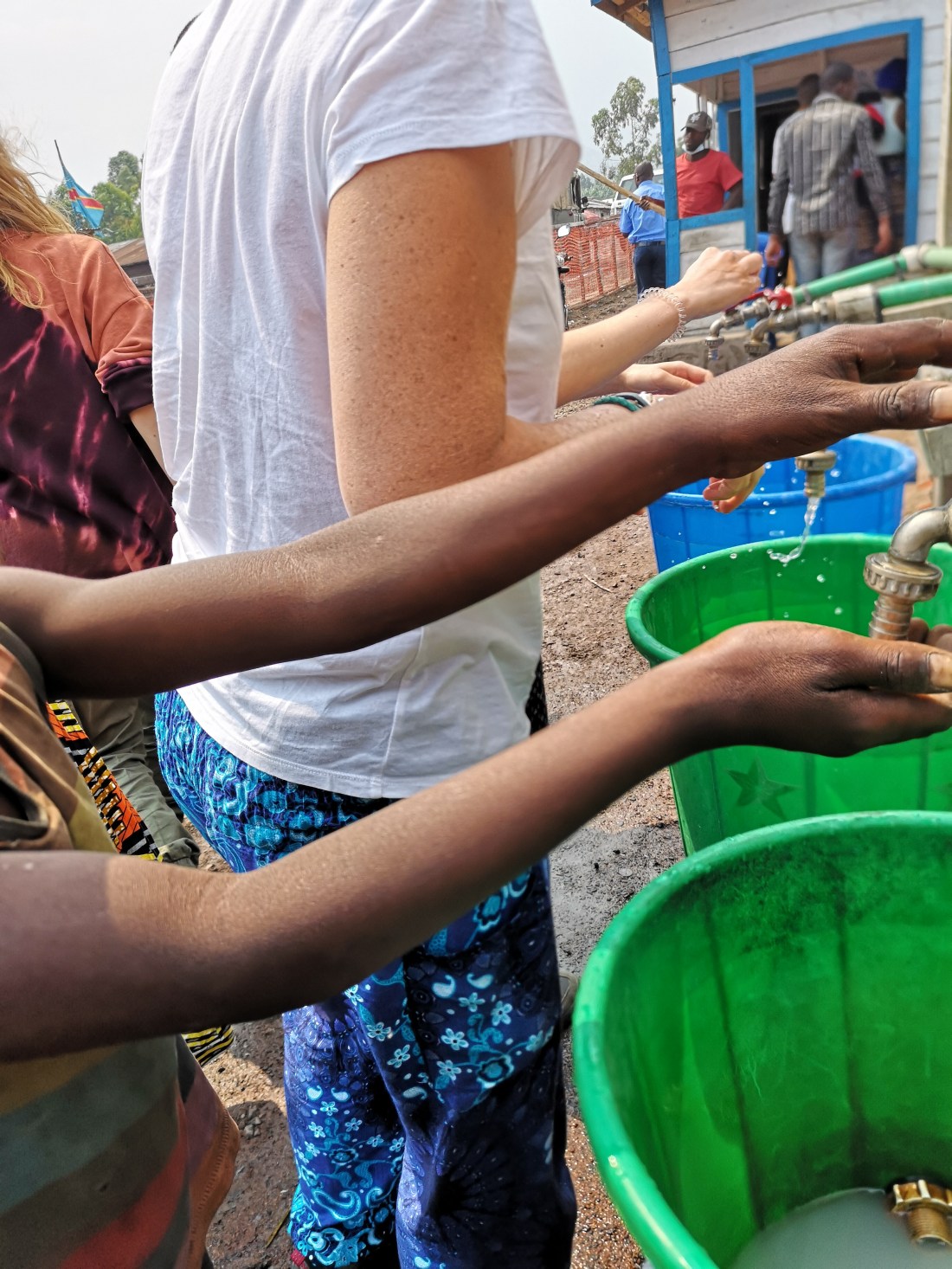
So here we are at the border dipping our hands in disinfectant and having our temperature taken, it’s feeling a bit real now.

rhdr

The actual border crossing was uneventful, the channel tunnel  crossing back into the UK from France is frankly way more stressful. We met up with the Virunga guys on the other side. 2 hour wait for transport and then we were off.

Goma is mental, pretty much how I imagined but more. People, bikes, ramshackle houses,  Chukudus loaded with sacks of all sorts. The video links show it better than I can describe it.

We went through another Ebola hand washing station then picked up our  escort of 6 heavily armed park rangers who followed us all the way. A quick tyre change to mend a puncture and we are on our way.

Out of Goma the traffic thinned a little, the road wasn’t tarmac’d but huge lorries still thundered past without much regard for the enormous potholes. We got to experience the famous African massage (aka the road shaking every bone in your body).

smacap_Bright

Eventually we turned  onto a narrow off road track which wound up through several villages. Our driver was very skilled at driving at considerable speed over rocks and ruts. Children called out and waved, there were lots of shouts of “mzungu” the African word for white people.

At the end of the track we left the jeep and with the help of several park staff carried our luggage up the steep steps to the lodge at Virunga

A 3 course lunch made with all locally grown fresh produce was delicious. The tents are very luxurious, definitely glamping (esp compared to Laffoley-lane style camping), there were so many nice little touches, flasks of hot water to make tea or coffee, a mobile phone so you can call for anything you need and best of all hot water bottles waiting for you when you come back after dinner. Could a person ask for more?

sdr_soft

We went for a walk to try and work off the effects of the late lunch. The others went to explore some caves (I passed on that, good call).

We walked around some of the local farms and went down to a crater with a natural spring where the women and children were filling plastic containers full of water to take back for the next days use. There is no running water in the houses here all the water comes from the crater and involves wading through thick mud to get to the cleaner water nearer the centre. The people live off what they farm and they just about subsist. Kids don’t go to school because you have to pay for it and everyone has to contribute to daily tasks like water collection. The villagers are so friendly, the girls are a lot more shy but they still smile and say bonjour.

On our return to camp we relaxed by the fire before another fantastic meal which we were too full from lunch to eat. We all felt very uncomfortable leaving food untouched knowing that the people we met today barely had enough. However I am pretty sure that none of the food went to waste especially the meat.

Solomon gave us a quick briefing about the plan for tomorrow then we had an early night in our very warm bed. Very excited about tomorrow.

A Thought Provoking Day

cof_soft

smacap_BFace

2 on-time planes, good seats, visa application on arrival and hotel taxi waiting made for an easy journey. Not what I was expecting. First impressions of Kigali, clean, green and chilled out. People are friendly and softly spoken, with beautiful faces.

Set off on our usual first day foray for local currency and sim cards only to discover that the last Saturday in every month is Umuganda , a day when everyone takes part in cleaning the city and other community projects. The roads and businesses are closed for the morning and everyone is expected to take part.

After lunch we headed off for a sobering trip to the Genocide Memorial. It’s an informative and very visual display which evokes some of the horror of the Rwandan Genocide , in which some 800,000 Rwandan tutsis were murdered by the Hutu army and civilian population. It is  the location of the mass graves for those who were murdered and has a memorial rose garden where local people go to remember their dead family and friends. It was both a grim and moving visit, I think for me the most difficult thing to bear was the childrens’ room where the walls were covered with photos of children and for each one a little write up about them, their favourite games and how they were murdered. You were allowed to take photos but it didn’t feel right. Our taxi driver explained that he was 11 when it happened and lost several family members. After we left I found myself looking at anyone of my age and wondering whether maybe they had macheted their neighbour to death or handed them over to the Interahamwe militia, as well as marvelling at how Rwanda seems to have put itself back together. We had some good family discussions after and it’s a must see if you are staying here.

cof

Gorillas not Guerillas (we hope)

Be very careful what you wish for for!! I have spent many happy hours watching nature progammes about the mountain gorillas in Virunga National Park, and the Chimps at Gombe. I’ve read Diane Fossey, Jane Goodall and Birute Galdikas’ books each time with the same wistful comment,  “it would be so fantastic to go there”, safe in the knowledge that we will never actually go because:-

a) It’s too expensive
b) No one else in the family is that wowed by the thought of primate watching
c) It’s too inhospitable
d) We might catch horrible diseases
e) It’s too dangerous
f) It really is too dangerous

So after exploring and rejecting the much gentler options of the Phillipines (too rainy in August), Indonesia (too busy) on Friday we catch a flight to Rwanda. A few days in Kigali  with a quick hop into the DRC (if you say this quickly it sounds less terrifying) to see the mountain Gorillas and climb up Mount Nyiragongo . Hopefully we won’t see any of the other sort of guerillas, or catch any horrible diseases. Updates to follow and if they don’t then you will know that I was correct about items c) to f) above………………………..


Time to go home

4 weeks later and we are back where we began in sunny Guayaquil. A spectacular drive here through  El Cajas National Park  with the usual temperature range of 2° to 28°. At one point you all you could see was mountains, blue sky and nothing else except a layer of cloud below. Impossible to capture in a photo but we tried!

Back in Guayaquil it was fun to walk the Malecon with everyone else enjoying the weekend. It was also good to be in shorts again.

Once again Ecuador did not disappoint with hidden treasures. We climbed up    Las Penas  (444 steps easy peasy at sea level) with beautiful views of the city and river.

A short taxi ride and walk across an 800m long pedestrian and cycle bridge took us to Isla Santay . Who would have imagined a beautifully preserved mangrove forest complete with a small village and resident crocodiles so close to a busy port city. It’s one of Ecuador’s idiosyncrasies that there is a lot of unfinished and half derilect stuff, graffiti covers even some of the loveliest buildings but then there are unexpected jewels like this.

We leave here tomorrow and it’s been an adventure that was very different from the one we had planned. The mountains are more beautiful than any I have ever seen. Even simply looking out of the car or hostel window made my heart soar. I rediscovered a passion for hiking, feel a lot fitter than when I arrived and it has inspired Geoff and I (probably not the teenagers though!) to do more mountain exploration. The people are shy, reserved but gentle and endlessly patient, especially with our poor Spanish. They are not as exuberant as other  S. Americans but still just as welcoming. It’s a safe and easy country to travel around, even with Geoff behind the steering wheel. There are lots of incredible places which the guidebooks barely touch on. Hire a car if you can as it allows you much more freedom to explore. Geoff’s favourite phrase was “this would be great place for motorbiking”. The mountain roads made for some interesting drives but they are in the main, traffic free. The cities are easy to drive around with a much more forgiving style than in Europe or the USA. It took a lot of research to find a company who met our budget and Carmax rent a car  were not only the best value by miles, they dropped the car off at our hotel and were very easy and helpful people to deal with. The mountain regions are full of colour, both landscapes and people. It seems like it has been untouched by the internet, or any of the usual trappings of modern life. It’s not like anywhere I have been before.

We enjoyed early morning walks along the beach at Canoa discovering what the tide had brought in but on the whole there are much better beaches in other countries and the interior is so special that I would recommend giving the coast a miss.

If you only manage one travel adventure in your lifetime and you love the great outdoors come here and come soon. It’s still uncommercialised with many areas unchanged for generations but geographically it’s quite small. You can see cities, mountains and jungle all in a few hours of travel. Thanks Ecuador we will miss you.


A Most Seductive City


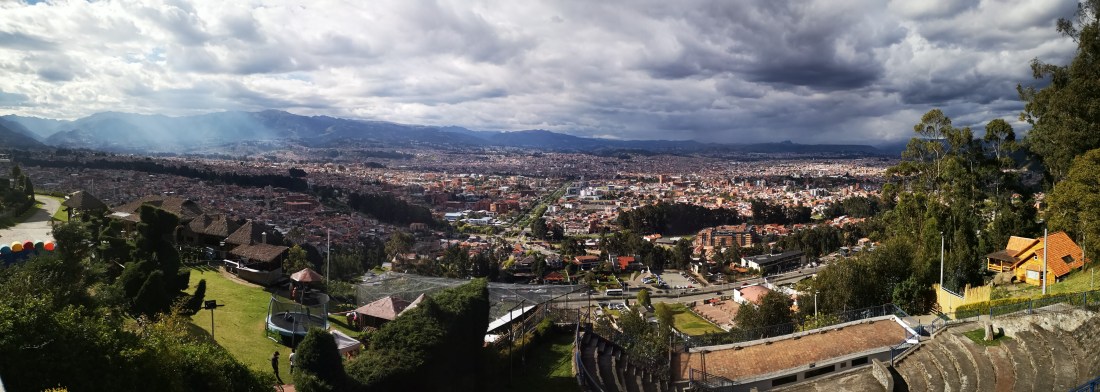
IMG_20180824_160941The Rough Guide to Ecuador lists Cuenca  as its “most seductive” city, it’s a very good description. The city itself has old Spanish Colonial Architecture with narrow cobbled streets. The Cathedral and central park area is beautiful, I could have sat for hours people watching and enjoying the sunshine. Obviously I didn’t as the other members of the gang get restless after 2 minutes in one spot! It’s old and traditional but arty and quirky too, students, tourists, workers and indigenous peole in traditional dress all rub shoulders on the narrow streets. It’s Ecuador’s second largest city and from above it looks huge but inside it feels small and you can drive right into the centre. It’s my favourite S American city so far.

The other joy is that 20 minutes drive and you are in rolling green hills where people still farm as they always have.

We stayed at a beautiful Hacienda next to Lago Molino.  The owners were away but allowed us to ride their lovely horses.

As with any Ecuadorean home it came complete with it’s own pack of resident dogs, with a slight difference! I have never had a close encounter with a Neapolitan Mastiff before and would probably prefer not to again. Not vicious, once you were in the grounds but big, barky, with a bouncy welcoming style and lack of spatial awareness which made me afraid of being flattened. Special mention must go to Canela the chocolate lab who came with us on our rides and fiercely protected all of us from any attempt by other dogs to bother us. She bravely bowled into a whole pack from a nearby farm who were definitely up for a spot of horse chasing and told them what was what. Top dog.

We had a fantastic stay in Cuenca exploring the city, the countryside and the pretty little towns of Gualaceo and    Chordeleg  nearby. The sun was warm, we walked miles and will be sad to say goodbye.

sdr

Lucky Finds and Celebrations

After the beauty of Quilotoa we weren’t sure where to head for our last few days. Much poring over maps round the wood burner finally deciding that it would be good to see Cuenca and surrounding area. It’s a very long (and winding) road round the other side of the mountain (8 hours) so we stopped off half way at the small town of Guamote. We lucked in on all levels, first of all we were spotted by Eva as we drove slowly through town. She runs the local  guesthouse. Inti Sisa has a small entrance on a narrow street but inside is large, bright and very welcoming. It’s more expensive than most hostels ($99) for a family room but the profits go back into running a  school and supporting other community projects. The evening meal was delicious and the hot toddy served by the fire was even better.

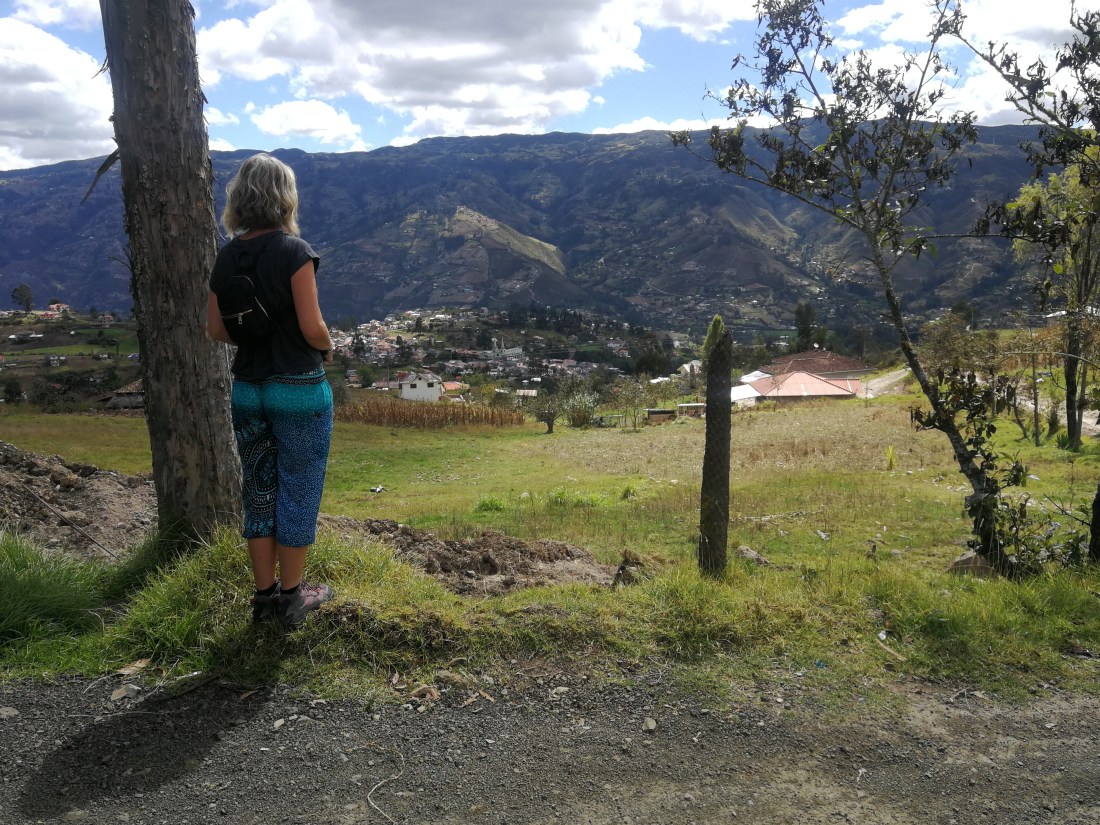
The second piece of luck was that Tom (also from Inti Sisa) gave us a map for a beautiful walk along the river, up to the top (3900m) and back through the indigenous village. The sun was shining and the views were beautiful. I did come much closer than I would have liked to being bitten by an angry dog but once in 3 weeks isn’t too bad (more about scary dogs to come).

And finally it’s one of the largest indigenous markets in the area every Thursday. So before the second leg of our journey to Cuenca we explored the jammed streets packed with stalls selling everything from Alpaca blankets to shoes, traditional clothing and cheap watches. Not to mention men on bikes with large trailers on the front loaded with goods hurtling down the streets at high speed. They appeared to have no brakes just a horn so it was a straightforward case of leap out the way or get flattened. The one photo we managed to get doesn’t do it justice, even more threatening than the dogs. We bought shawls, jumpers and persuaded Cara not to buy a watch!

Final stop was the animal market, guinea pigs, rabbits, chickens, donkeys all being bought and sold. Colour, noise, smells, definitely an experience that bridges the gap between cute furry animals and food. Whatever your views on meat eating I can say that these animals are treated with more respect and kindness than any mass farmed animal in Europe. Piglets, sheep and calves on leads walking down the street with their new owners where they live as part of the family with their babies alongside them. Hens being cuddled under shawls and jackets. Not so sure about the guinea pigs and rabbits, being bundled into sacks. We even saw a man (bottom picture) with a box of snakes large and small but due to our poor Spanish we couldn’t work out whether he was putting on a show, selling snakes, or selling snake oil.

As I mentioned earlier we stayed in a family room at the hostel, a cosy room but a restless night as Drew’s GCSE results would hopefully be waiting on my email when we woke up. By 6.00am all hope of sleep was gone and a very happy Drew opened a fantastic set of results. Celebrations tonight when we get to Cuenca.

One of the funnier moments of our trip was that Eva had a horse recovering from colic which needed further treatment. So Geoff the “resident horse expert” stepped in and spent the evening practicing his skills. As well as running Inta Sisi, and fund raising for the community school Eva rescues dogs, cats, llamas and pigs, just about anything that needs it. She drove Geoff to her house whilst 2 of her dogs ran alongside the truck. Driving onto her property without running anything over was a serious challenge (apparently one dog has a missing tail after an unfortunate altercation with her truck). Anyway you will be pleased to know that the horse made a full recovery and Geoff dispensed the useful guidance that it probably wasn’t necessary to bring it into the house for the night! You meet some eccentric people when you travel but the world is definitely a better place with people like Eva in it.

Lake Quilotoa


dav

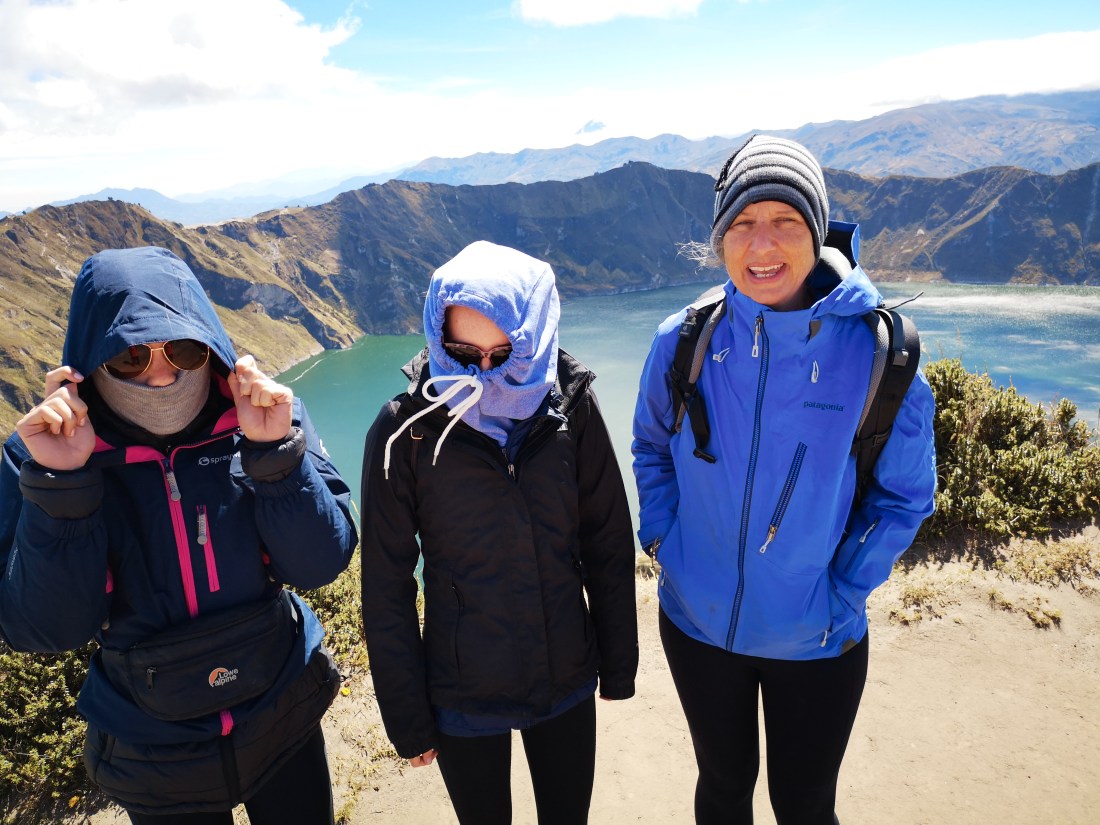
We awoke early after a restless night with high winds. Today’s expedition was to hike the 280m vertical descent (and back) to Lake Quilotoa . At the crater rim it was something like this

sdr

Video to go in here

After a 30 minute hike down to the lake it looked like this

The hike back up was just a bit hard! It took me 1hr 10 and it was just a case of putting one foot in front of the other very slowly. I met a few friends on the way and took the opportunity to practice my French. Geoff went up like a mountain goat catching up with Drew and her mule.

Cara went for the mule option from the start. Drew hiked a little way and then found herself a mule.

IMG_20180821_120152.jpg


El valle más hermoso del mundo

In our travels across S America every village always has “the most beautiful/exciting/dangerous/biggest/longest something in the world” whether it’s a viewpoint, a river, zipline, or 360°degrees swing. However after a very windy drive up through the mountains we have definitely found the most beautiful valley in the world.

Screenshot_20180821_063627

The drive up from Porto Viejo was almost a solid 5 hours of hairpin bends as we climbed up through the clouds. The occasional km or 2 of straight road  through small towns provided a welcome break. Finally we rose up above the clouds and with sheer drops on one side we climbed up to the mountain town of Zumbahua . A brief stop here for some lunch and a quick inspection of a possible hostel (no windows, shared bathrooms, not keen). We drove for another 30 mins down the hill hoping that the next stop in Chugchilan would be a bit more enticing. By this stage Geoff was worn out from driving and I was feeling horribly car sick so to be honest a tent in a field would have done never mind shared bathrooms. We struck lucky, Chugchilan is a traditional Andean village and Hostal El Vaquero is beautiful, rustic (in a good way) lots of warm blankets and a wood burning stove in the lounge. It’s 3200m high so the altitude definitely gets you, I found myself puffing like someone with a 40 Marlborough a day habit on the walk back up from the village. It is quite simply the most beautiful place I have ever been. The valley is wide with sweeping plains, then as you climb it’s green and lush. As you get higher it becomes dryer and dusty just as you see it on nature programs.

Views across the valley with Cotopaxi rising from the clouds in the distance.

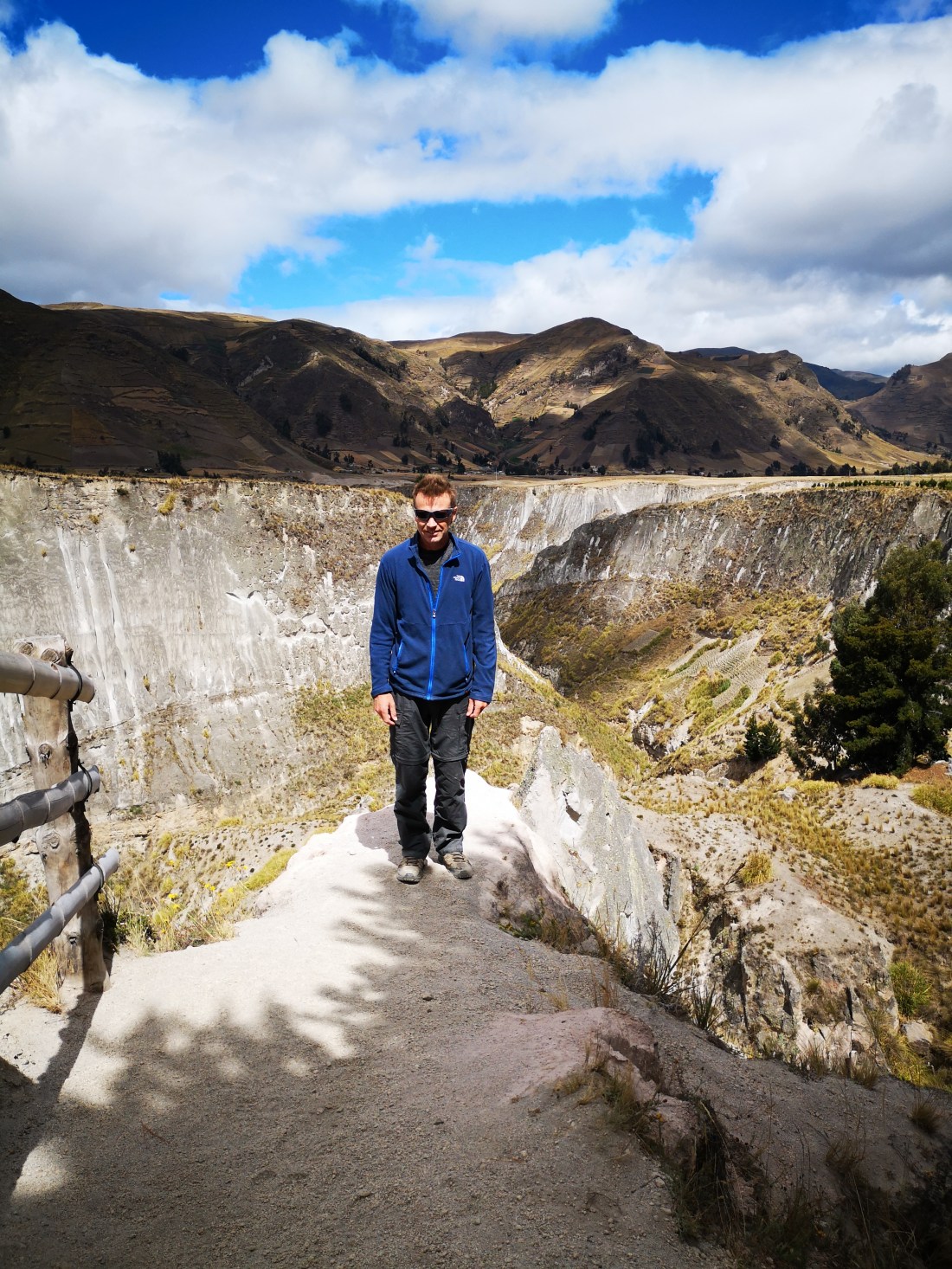
Views across the Canon Del Rio Toachi. Geoff is balanced precariously just for the photo and he looked a little worried at one point.

dav

cof

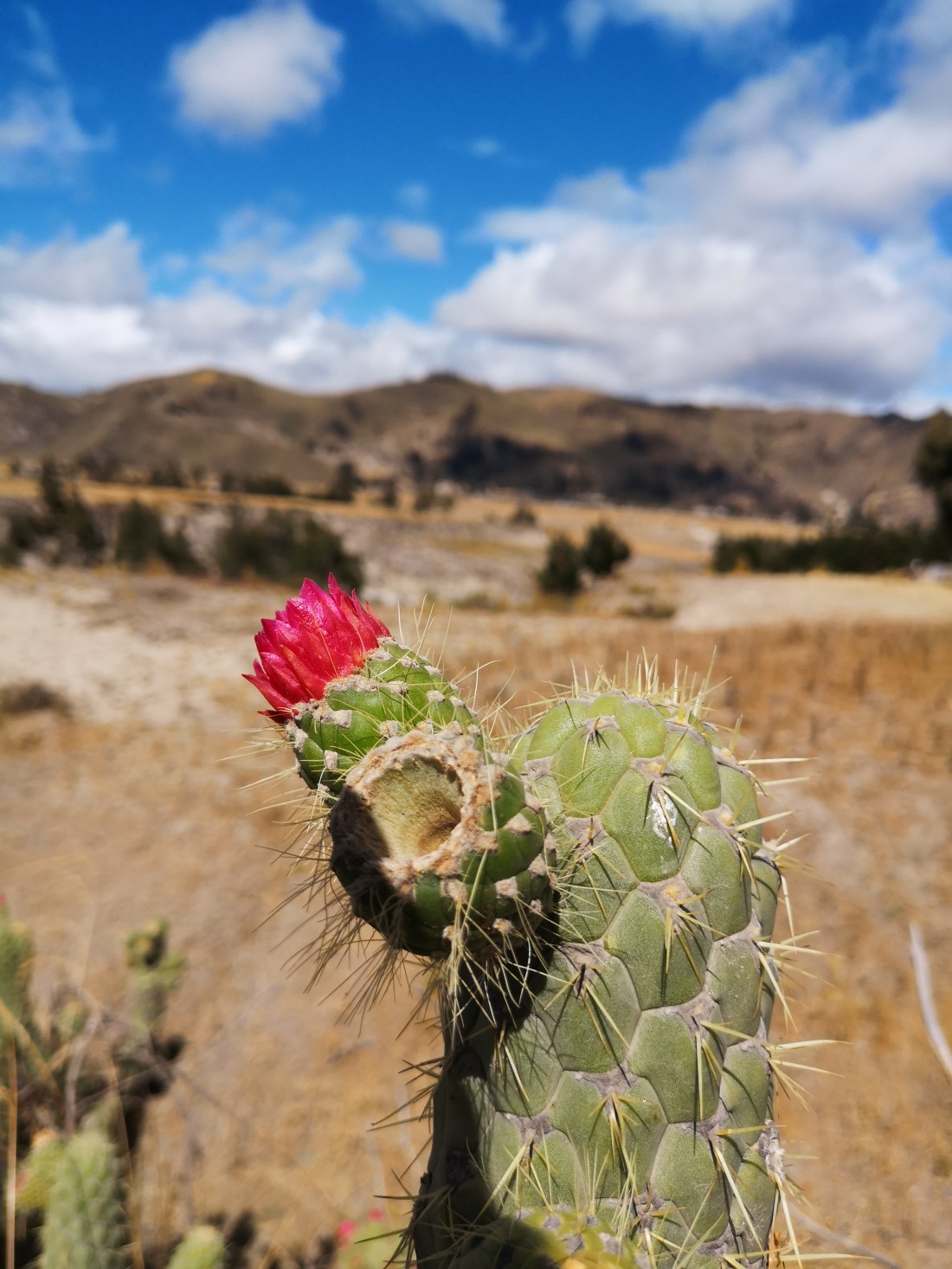
Cactus in Flower

dav

There are indigenous Andean families living pretty much the same way they have for centuries. Small children herd flocks of sheep and donkeys carry crops and water. But it is changing, the old gravel road has been replaced by a shiny new black top giving easier access for tourists to come in and locals to move out. New hostels are popping up, motorbikes and trucks are slowly taking over from donkeys and I think this way of life will disappear in the next one or two generations. If you love mountains, you should come whilst it is still here. I promise it’s worth it.
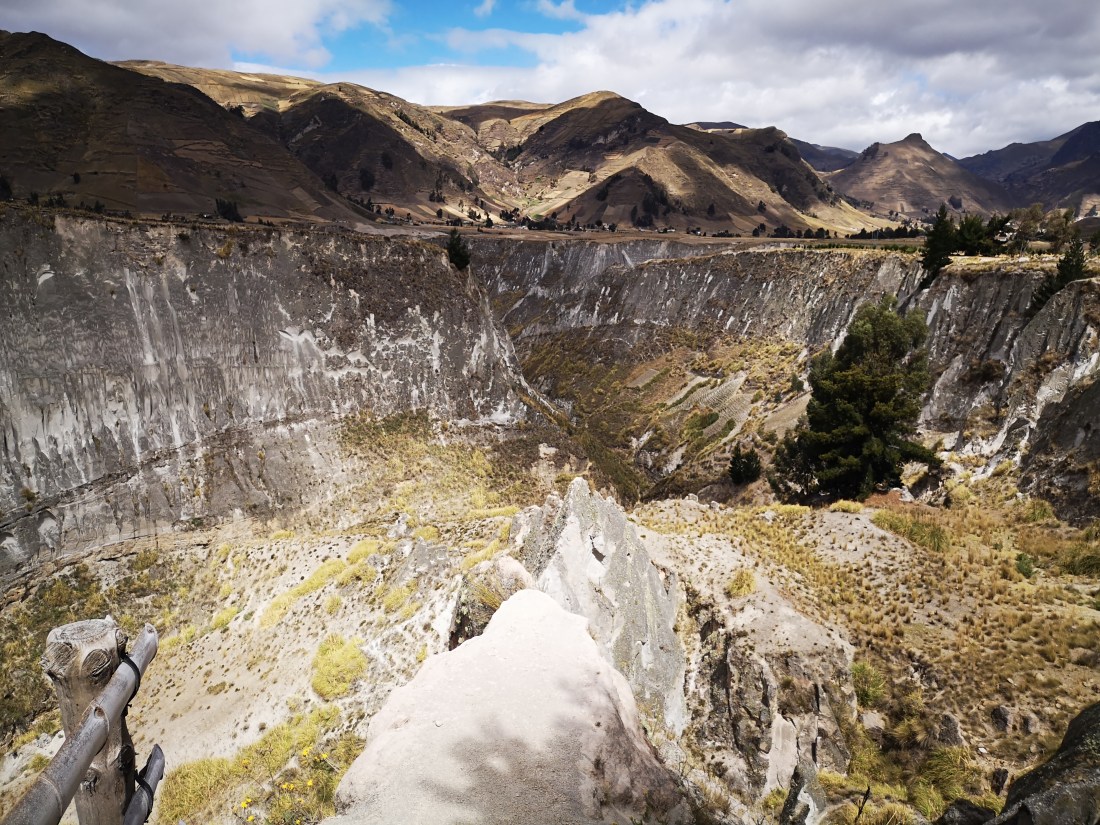
Traditional house with views across the valley


Agua Blanca

No trip to S. America would be complete without covering ourselves in very smelly mud claiming dubious health benefits, followed by immersion in an equally dubious looking pool.

Agua Blanca  near Puerto Lopez is a community of indigenous people living a traditional agricultural lifestyle on a quiet hillside area. In addition to farming they run the museum which explains the history of the people who have lived here and the sulphur springs. The day was sunny and the views from the top over the valley were beautiful.

The springs were good fun too. Well worth the visit.